Giving students a voice: How Student Story turns qualitative feedback into real change
Original Story: Wenatchee Business Journal & NCW News
Giving students a voice
When Susan Rose looks at the data that drives most decisions in public education, she sees a gap.
Test scores, graduation rates and attendance metrics dominate the conversation. But as an assistant principal in Quincy, Rose knows those numbers only tell part of the story. Her students, she says, have “incredible dreams, resilience, dedication to family,” and many want to stay in their rural communities—realities that rarely show up in traditional data.
That disconnect became the foundation for Student Story, a platform Rose created to bring student voices directly into decision-making.
From dissertation to platform
Student Story began as an academic project.
Over 16 years in Quincy schools—as a teacher, instructional coach and now assistant principal—Rose saw firsthand how limited quantitative data could be. For her PhD dissertation, she collected and analyzed student personal statements, using their narratives to identify needs and opportunities that weren’t visible in standard metrics.
Her goal was to take student voices and place them into decision-making spaces, helping educators better understand what students actually want and need.
The response was powerful. School leaders connected deeply with the stories, and the insights informed real changes. But the process came with a major limitation: it wasn’t scalable.
As Rose shared the work across the state, educators consistently told her the same thing—they loved the results, but didn’t have the time or resources to replicate it.
The analysis required months of manual coding and expertise most schools simply don’t have.
Frustrated, Rose initially dismissed the idea of using artificial intelligence. She preferred traditional, human-centered research methods. But after encouragement from her husband, a developer, the two began experimenting with AI tools using her dissertation data.
To her surprise, the technology could replicate much of the same qualitative analysis.
What started as a small experiment evolved into Student Story—a platform designed to make qualitative feedback accessible at scale.
Turning stories into action
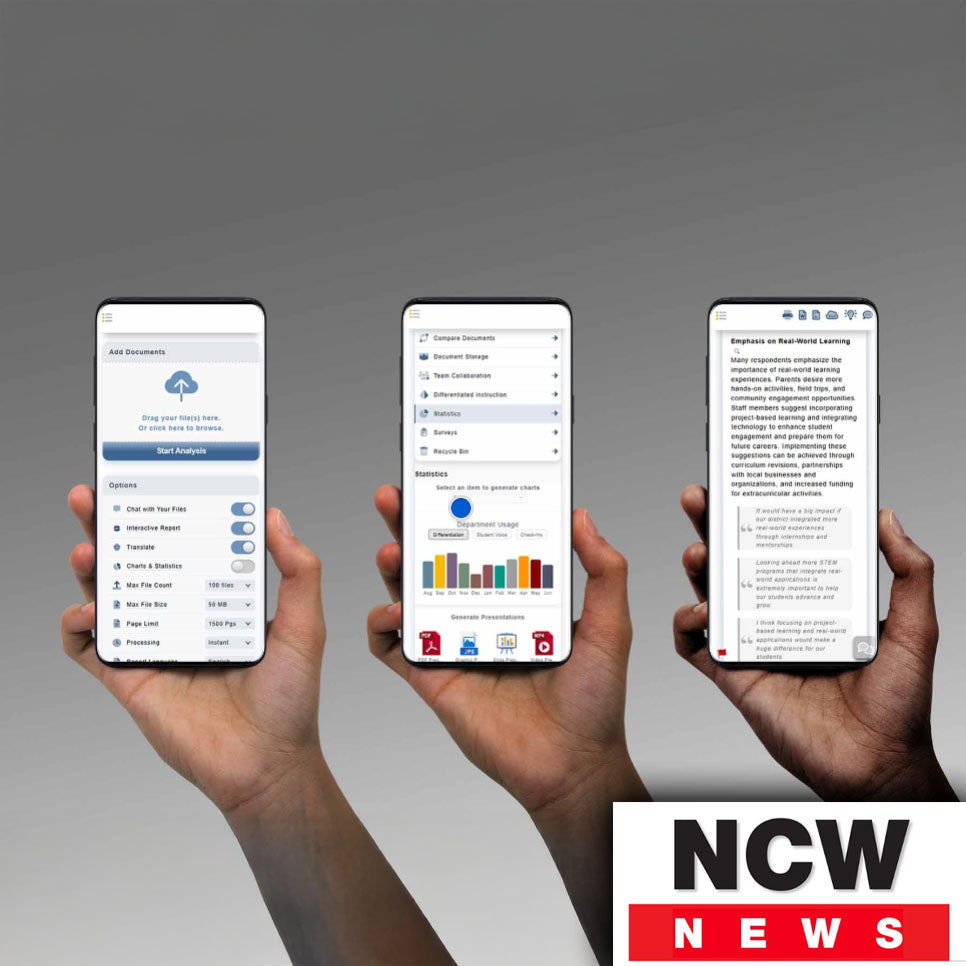
At its core, Student Story transforms open-ended, human input into actionable insights.
Educators can upload student essays, survey responses or interview transcripts. The platform then analyzes the data, identifying key themes, coding responses and surfacing next steps.
Just as important, it highlights what’s working—not just what’s broken.
Rose said much of the data schools receive is deficit-focused and often feels overwhelming or unusable. Student Story aims to shift that narrative by capturing what students value, what they need and what helps them succeed.
The platform is also language-agnostic, allowing students to respond in any language while still generating usable insights for educators. That capability has been especially meaningful in communities with multilingual learners, whose experiences are often underrepresented.
Real change in the classroom
The most immediate impact of Student Story can be seen in Quincy High School’s science department.
Teachers were struggling to improve outcomes and weren’t sure how to move forward. Rose suggested they start by asking students directly.
Using Student Story, the department gathered feedback on student experiences. The responses were clear: students wanted more hands-on learning, more collaboration and less overwhelming vocabulary.
Teachers responded by increasing lab activities, incorporating more group work and simplifying how they introduced key concepts.
The results were dramatic.
One teacher reported having no failing students and hearing feedback from students who said they enjoyed chemistry more than other classes.
Beyond improved performance, the shift changed teacher mindset. Educators began to see student feedback as a powerful tool for shaping instruction, not just a requirement to check off.
The process is now repeated annually, allowing teachers to adapt to each new group of students rather than relying on outdated data.
As Rose noted, each cohort is different—and real-time feedback makes it possible to respond accordingly.
A rural solution gains ground
Although rooted in Quincy, Student Story is expanding.
The platform is currently used within the Quincy School District, in parts of ESD 105 and in the Griffin School District, where it has supported strategic planning. It is also being tested at the University of Dayton and in other districts exploring how qualitative data can complement traditional metrics.
Even as it grows, the platform remains grounded in rural experience.
Rose believes that perspective is critical. Too often, education technology is developed far from the communities it’s meant to serve. By contrast, Student Story was built by someone embedded in the daily realities of a rural school system.
She also points out how uncommon it is for rural educators to develop AI-driven tools, noting that access to networks, funding and technical expertise can be significant barriers.
Support from organizations like NCW Tech and connections to mentors and collaborators helped bridge that gap, strengthening the platform’s development and reach.
The cost of building something new
Building Student Story has required significant sacrifice.
Time has been the biggest challenge. Rose balances her role as a school leader with the demands of growing a technology platform, while her husband has worked on the project full time.
They are also competing in a crowded edtech space, where many companies have access to larger budgets and established networks.
Despite those challenges, Rose remains focused on the impact.
For her, the most meaningful reward is seeing tangible changes in students’ lives—using technology not just for efficiency, but for something that genuinely improves outcomes.
That sense of purpose is also tied to a broader awareness of AI’s impact. With major data infrastructure visible in her own community, Rose is conscious of the environmental and ethical implications of the technology she’s using.
Her goal is to ensure that Student Story contributes something meaningful in return.
Looking ahead
Rose envisions Student Story becoming a tool any educator can use easily—a natural part of how schools gather and respond to feedback, rather than a specialized project.
She’s also exploring its potential in higher education and research settings, where qualitative data plays a critical role.
More broadly, she hopes others—especially those in rural communities—will step into the AI and technology space.
Too often, she said, valuable perspectives are left out of innovation. Encouraging more educators and community leaders to engage with these tools could lead to better, more representative solutions.
Her message to those who may feel hesitant is simple: don’t be afraid to try.
Centering student voices
At its heart, Student Story is about more than technology.
It’s about ensuring that students are heard—and that their experiences shape the systems designed to serve them.
By turning stories into actionable insight, the platform helps educators move beyond assumptions and respond to what students actually need.
For Rose, that’s the ultimate goal: not just collecting data, but using it to create real opportunity.
In a system often defined by numbers, Student Story offers something different—a way to listen, adapt and build an education system that reflects the voices at its center.
Original Story: Wenatchee Business Journal & NCW News